Yesterday I ran 70 kilometres across the Swiss Alps. This morning I am standing thigh-deep in a lake above Crans-Montana. The water in Lac de la Moubra is 17°C - a little cold for me to swim in my bikini, but perfect to refresh my tired legs - and sore quads. Considering what I've just put them through, though, they feel surprisingly normal. Twenty-four hours earlier, I wasn't at all sure they'd get me here.
“I just can't visualise myself as a 100K runner,” was my overriding thought the night before the Wildstrubel by UTMB Wild 70.
Technically, I'm hardly an ultra novice. I've run around 20 trail races in the 40–50km ballpark, raced 62km in Nice and made it to around 70km of the CCC before stomach problems ended my race. Just three weeks earlier I'd finished the 40km MCC during UTMB week in Chamonix.
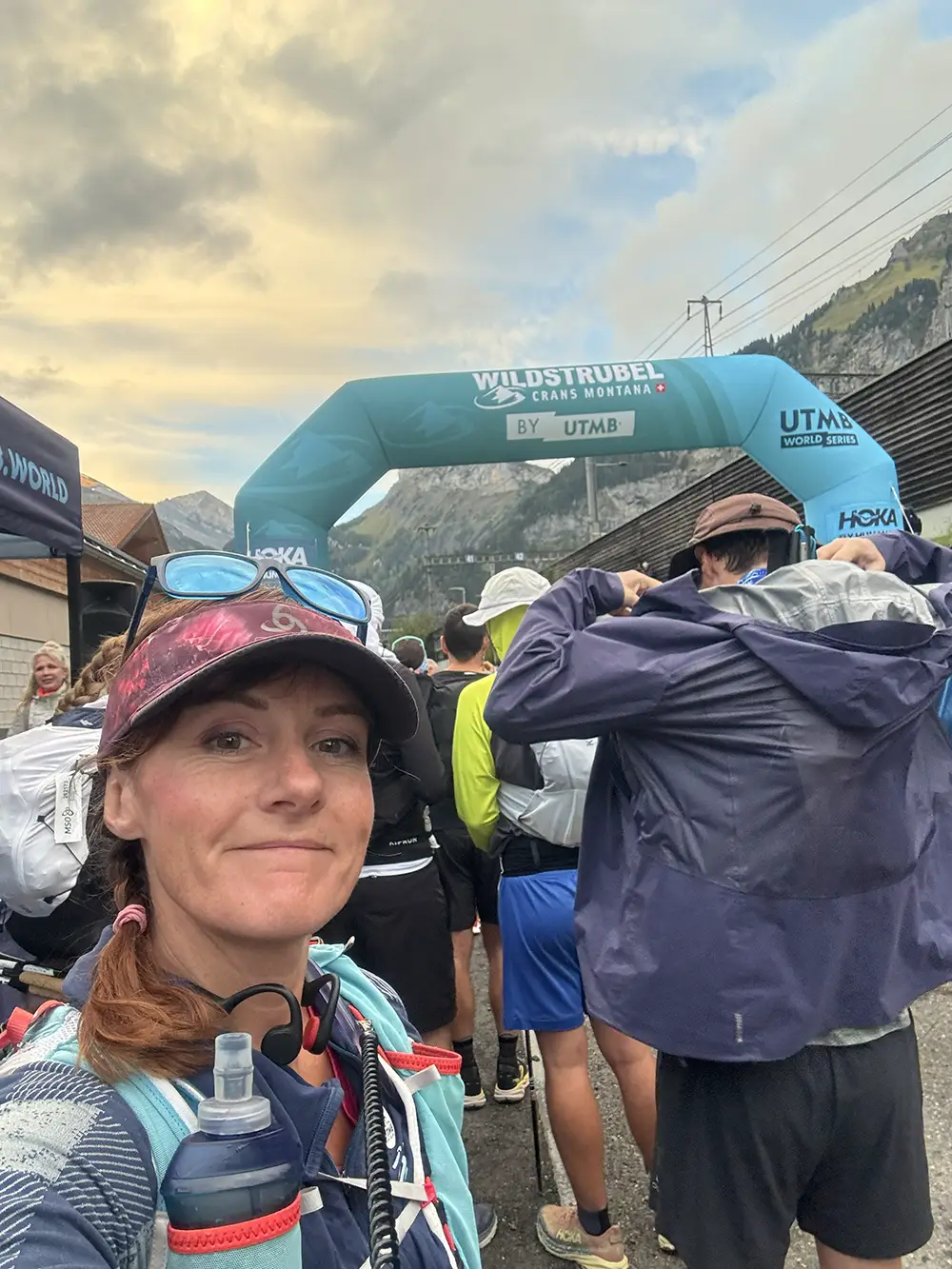
But this felt different: 72km from Kandersteg to Crans-Montana, crossing the Bernese Alps with officially 4,600 metres of ascent. In UTMB classification terms, it would be my first completed 100K-category race.
It was also roughly twice what I'd raced three weeks earlier.
At least the logistics were unusually civilised. I'd been given accommodation in Kandersteg the night before and Crans-Montana after the finish, with my main bag transported between the two. It meant no hideous pre-dawn alarm to catch a shuttle to a distant start. I could eat breakfast, walk out of my hotel and go to the start line.
If all went to plan, I'd simply cross the mountains and find another hotel room waiting for me at the other end.
And if I couldn't do it? I could stop. “Treat this as training”, I said.
Although I know myself well enough to know that probably wasn't going to happen without a very good reason.
A different way of looking at fitness
I'd also arrived at Wildstrubel with a new bit of kit: the Suunto Vertical 2.
In the weeks before the race, it had made me think differently about what “fit” actually means. Like most runners, I've always understood VO2 max reasonably well. What I'd paid far less attention to was chronic training load — essentially how much training you've consistently absorbed over the preceding weeks.
That was slightly uncomfortable.
I'd spent years doing what I think of as my annual “hero run”: turn up, do something enormous, recover and eventually repeat - probably the following year. I've completed plenty of races of roughly 50km, but that isn't necessarily the same as building the sustained training load to run them faster or comfortably stepping up to longer distances.
My watch thought my VO2 max was pretty good. My training load was considerably less impressive.
So I wasn't particularly convinced by predictions suggesting I might get around Wildstrubel in under 15 hours.
What I had done, however, was customise the Vertical 2's trail-running screens. One thing I specifically wanted in front of me was accumulated ascent.
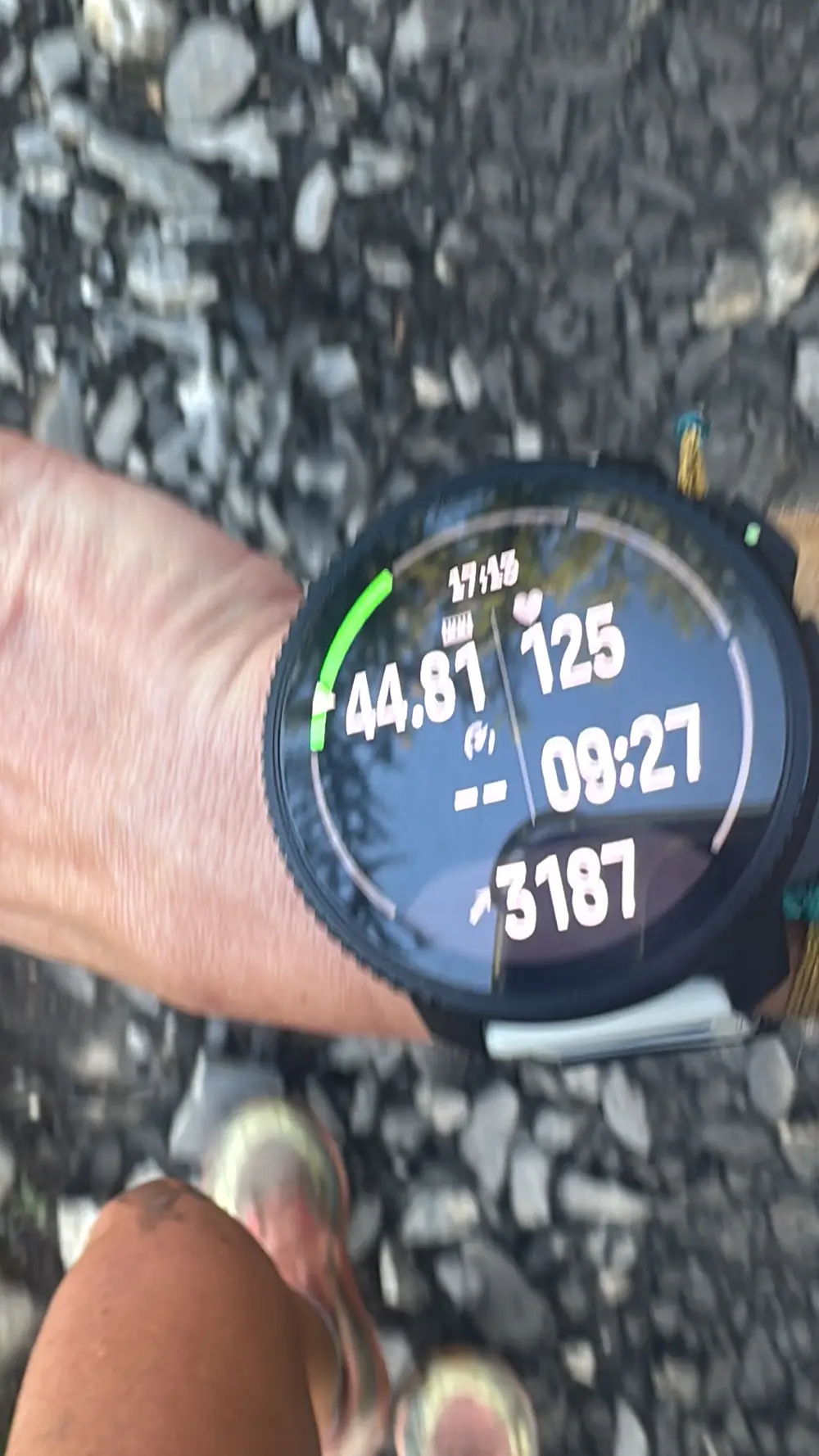
On a race with 4,300 metres of climbing, I suspected that would matter more to me than kilometres.
I had no idea quite how right I'd be.
Into the mud
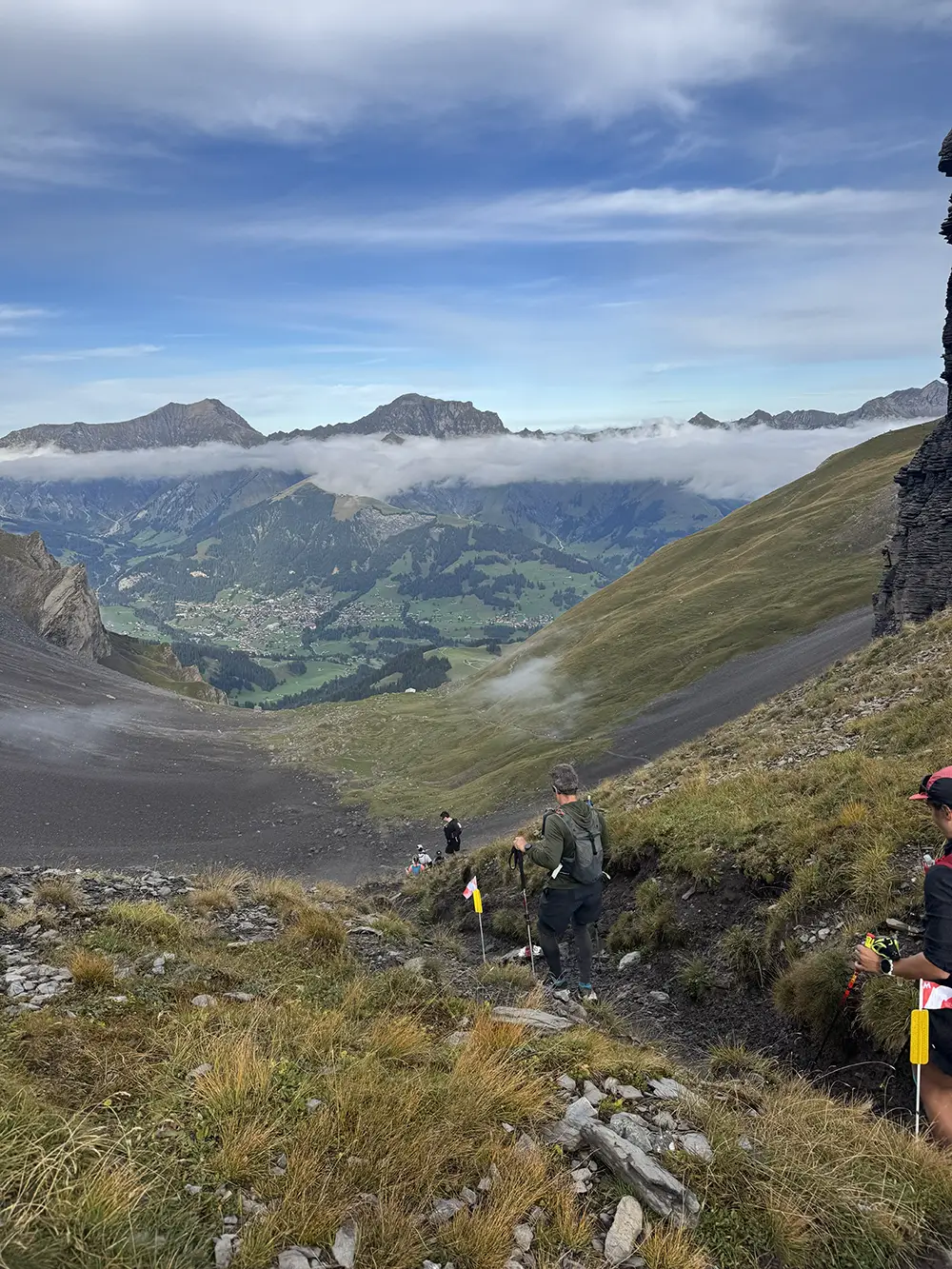
The first 25km were horrible.
My body simply didn't seem to want to do it. I felt slightly low on blood sugar early on, while rain and hundreds of runners had helped turn sections of the first major climb and descent into mud.
There was another problem. My trail shoes were approaching retirement and suddenly had about as much grip as you'd expect from something I'd spent months grinding over Alpine rock.
Descending is normally where I make up ground. Not this time.
I couldn't get going with my normal confidence and, with more than 50km still ahead, I was conscious that hammering the descents could come back to haunt my knees later.
There was also far more ordinary running than I had somehow expected. Between the big mountains came stretches of flatter, lower-level trail. Normally I'd welcome them. Instead I found myself running a bit, walking a bit and thinking: this is a slog.
So I stopped thinking about kilometres.
I looked at my watch.
More than 1,000 metres climbed.
That's nearly a quarter of it.
Then 2,000.
That’s nearly half.
That became my way of getting through Wildstrubel. Instead of thinking, I've still got 45 kilometres to go, I watched the ascent being chipped away.
Having saved the route onto my watch, the profile it gave me helped even more. On a seemingly endless climb, I could see where I actually was on the mountain: whether the top was somewhere vaguely in my future or whether I was genuinely getting close to it.
It turned 4,600 metres into a series of smaller jobs.
I also started paying much more attention to the descent figure. There is an enormous amount of downhill in this race, and thousands of metres of descending can batter you every bit as effectively as climbing them.
Crossing the Bernese Alps
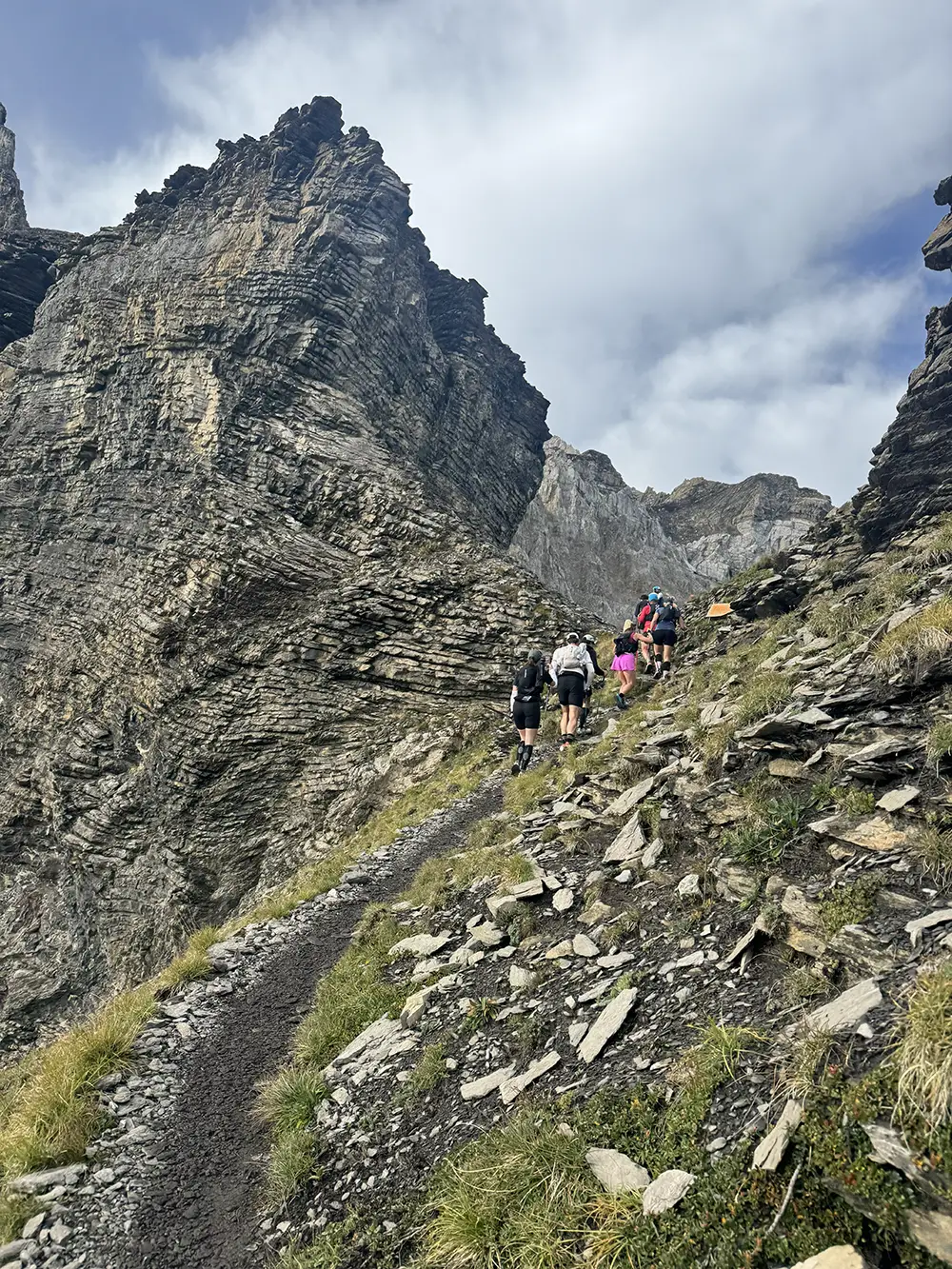
There are moments when the statistics of Wildstrubel become secondary anyway.
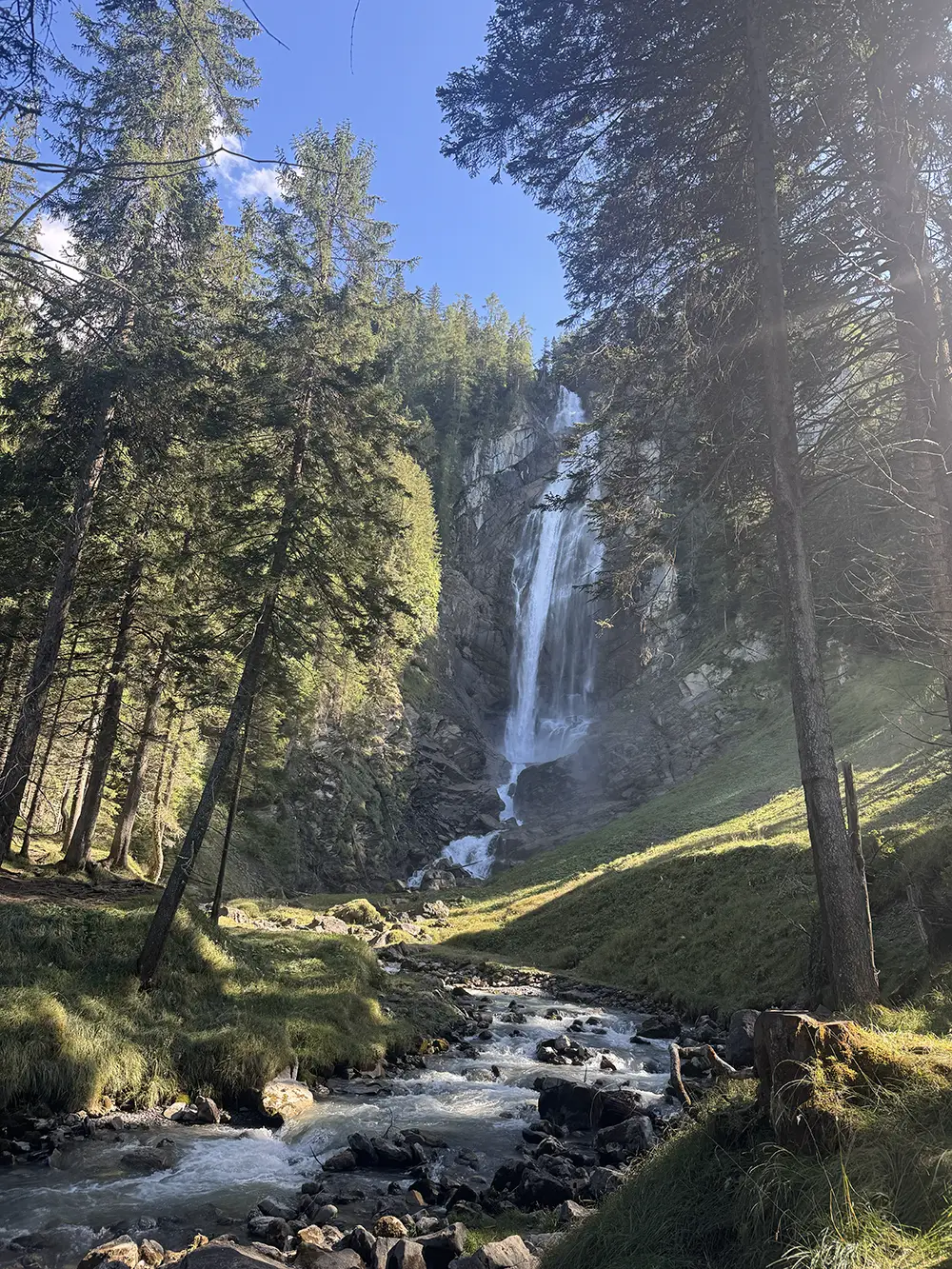
The route travels through a large chunk of Switzerland, leaving Kandersteg and crossing high mountain passes towards Adelboden, Lenk and Iffigenalp before eventually heading towards the Wildstrubel massif, the Rawil Pass and the Tseuzier dam on the way to Crans-Montana.
This is what makes a point-to-point mountain race different from simply accumulating 70km on a circular course. You are actually going somewhere.
The place where you ate breakfast becomes geographically distant. Valleys disappear behind you. Mountain ranges that looked intimidatingly far away eventually end up beneath your feet.
There are also less poetic moments.
At Lenk, things briefly descended into farce.
After a kit check, I put my poles down, refuelled and headed off again.
Only to discover I didn’t have my poles on me.
I searched. I wasted time. I began panicking slightly at the prospect of another couple of thousand metres of ascent without them.
Eventually a woman held up a pair.
“Are these yours?”
They weren't.
They were too long for me. They were, however, lightweight carbon poles and better than nothing.
So, reader, I took them.
By darkness, I was extremely grateful I had. Some of the later descending was steep, rocky and technical enough that even I didn't want to run it. Other runners seemed capable of throwing themselves down it with no apparent sense of self-preservation whatsoever.
My knee began to hurt, and I realised there are limits to my claim of being a good downhill runner. Give me a flowing trail, and I'm confident. Turn a mountain into enormous rocky steps, scree and shale and, at five feet tall, I'm considerably less enthusiastic.
Yet somewhere around 50km something unexpected happened.
I felt better.
Babybel, bouillon and the long way home
My stomach was holding together too.
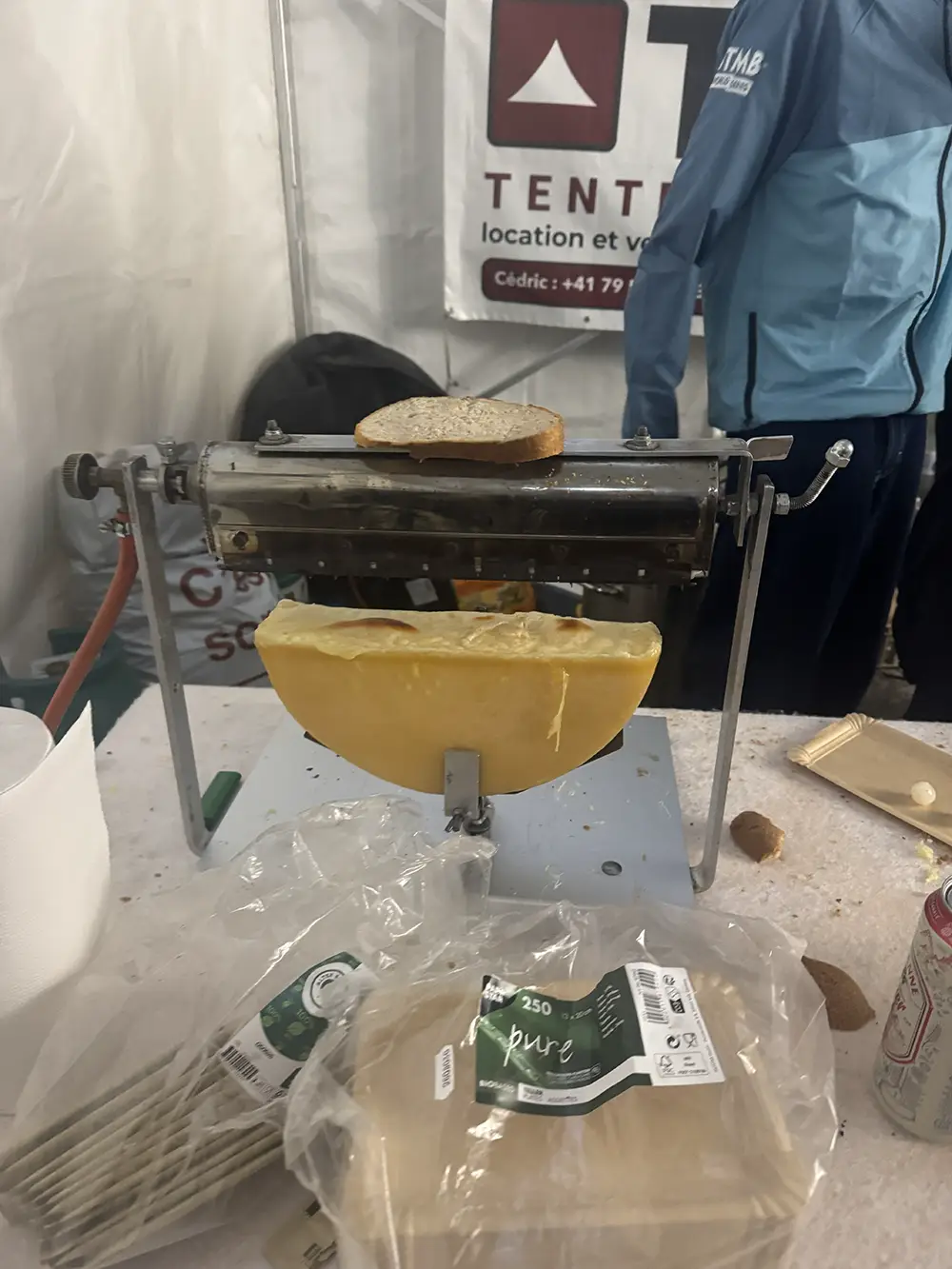
I'd been disciplined about taking gels and salt tablets, but as the hours passed I increasingly wanted things that resembled actual food. Wildstrubel's aid stations supplied bouillon, cheese, Rivella and Fanta.
I'd also stolen several Mini Babybels from the breakfast buffet in Kandersteg.
They were magnificent.
After hours of gels and sweet food, it was good to have something that tasted like food rather than sports nutrition.
By the final 10km, though, I'd had enough.
The profile suggested the worst was over. My legs disagreed.
There was still another little climb. On paper, after 4,000-plus metres of ascent, it was almost nothing. At that stage of the race it was a fucking killer.
Another runner and I also briefly went the wrong way. We hadn't travelled far before realising, but in darkness there's a uniquely horrible moment when you notice you can't see another runner or headtorch and wonder exactly where you've ended up.
And then came kilometre after kilometre of almost-flat running.
This should have been my terrain. 15 hours into a mountain race, it didn't feel like it.
My internal monologue had been reduced to: when will this be over?
The nausea began creeping back during the final few kilometres. I'd run out of gels. I took another salt tablet and kept moving.
I'd hoped to reach Crans-Montana at around 9.30 or 9.45pm.
Instead, I crossed the finish in 16 hours, six minutes and 58 seconds.
There weren't many people left. A few hardy spectators and volunteers were still there as I finally ran into Crans-Montana late at night.
After an entire day spent trying to get from one side of the mountains to the other, suddenly there was nowhere else to go.
I'd finished.
And I was surprised by how emotional I felt.
A watch that lasted longer than I did
I also looked at the Vertical 2.
After more than 16 hours of GPS recording, navigation and repeatedly checking my progress across the mountains, it still had 65 per cent battery remaining.
But the thing I valued most wasn't the battery.
It was information.
The watch hadn't got me over the mountains, obviously. But being able to see the ascent slowly disappearing, and visually place myself on each climb, had genuinely changed how I mentally managed the race.
I hadn't expected that.
Crans-Montana, the morning after
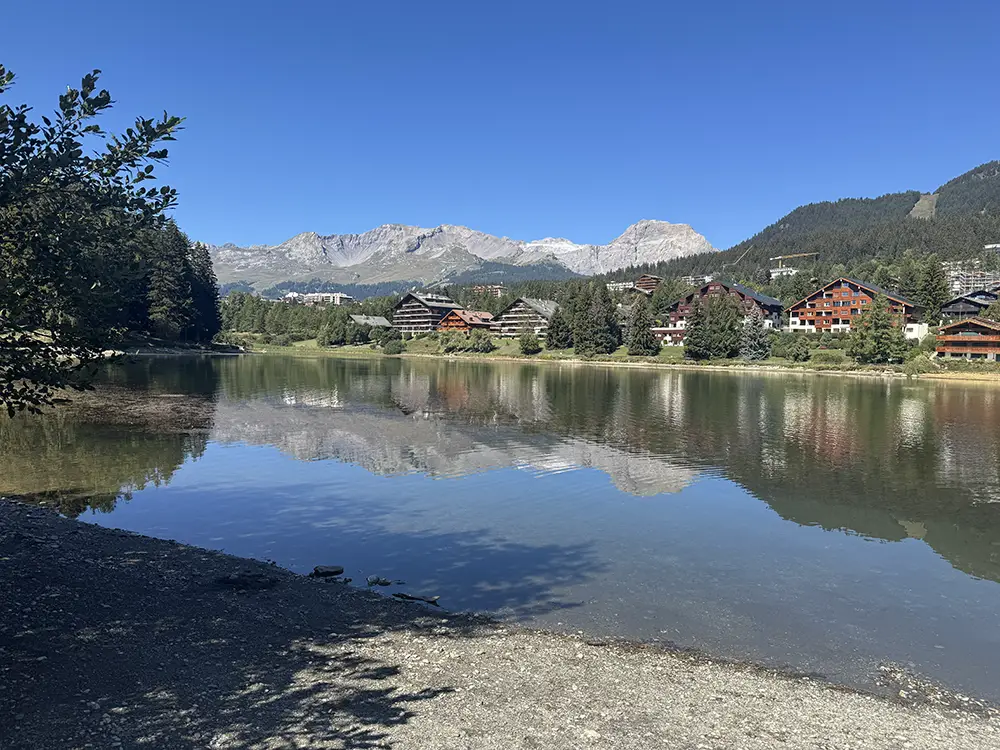
Which brings me back to the lake.
After dunking my legs in Lac de la Moubra, I wandered back through Crans-Montana. My quads hurt, but otherwise I was pretty much intact.
And the Wildstrubel weekend was far from over.
When I'd arrived late the previous night, the centre had been quiet. Now barriers were lined with spectators and the race announcer was back in full flow. Cowbells rang. People applauded.
And then the front of the Wild 55 came flying into town.
“Flying” isn't much of an exaggeration.
Morocco's Elhousine Elazzaoui won the 54.4km race in 4:49:05, averaging a scarcely believable pace over a course containing more than 3,000 metres of ascent. His UTMB Index is 968. France's Tibère Debize, with an Index of 893, finished just 22 seconds behind him.
These weren't simply very good runners. This was world-class trail running taking place on the same mountains I'd spent most of the previous day crossing.
Watching the sharp end from behind the barriers was almost surreal.
Yesterday I'd been the person coming towards Crans-Montana, alone in the darkness, desperately wanting the kilometres to end.
Now I was part of the crowd cheering someone else home.
And, once again, I found myself unexpectedly emotional.
Perhaps because a finish line looks so simple from this side of the barrier.
A runner appears. People cheer. They cross beneath an arch. The clock stops.
What you can't see is everything that happened before it: the mountains crossed, the mud, the nausea, the food you somehow forced down, the poles you lost, the stranger's poles you accidentally acquired, the moments alone in darkness and the tiny climbs that somehow became harder than the enormous ones.
Or the satisfaction of looking at your wrist and discovering another thousand metres of mountain has disappeared.
Wildstrubel also answered a question I'd been asking myself before I arrived.
Could I finish this kind of race?
Yes.
Did finishing it make me want to go even longer?
I don’t think so.
Would I do it again?
Well, that's a thought for another day.
For now, standing in the sunshine in Crans-Montana, cowbells ringing and some of the world's best trail runners hurtling towards the finish, I was simply glad I'd crossed those mountains once.