Walking is a poor way to make friends, if you go by the usual advice about eye contact and open questions. You spend the day facing forwards, a metre apart, often too out of breath to say much. That is precisely why it works. Nobody has to perform, the silences are part of the format, and by the fourth evening the group has settled into itself without anybody having engineered a single conversation.
Group Departures and Self-Guided Routes
The first decision is the format, and it matters more than the destination. A guided departure puts 10 to 16 strangers on the same schedule with the same leader for a week, which means the same 12 people for 7 days, at every meal and every rest stop. A self-guided booking gives you the route notes, the accommodation and the baggage transfer, and leaves the walking to you.
Self-guided is cheaper and more flexible. It is also solitary in a way that catches people out. A guided week tends to end with an exchange of addresses. A self-guided week tends to end with better photographs and a quieter journey home. For anybody booking specifically to meet people, the guided departure is the sensible one. Expect to pay roughly 30% more for it, and expect the last 2 places on any departure to be discounted in the fortnight before it leaves.
Daily Distance and the Knee Question
Operators grade routes by daily distance and ascent, and the numbers matter more after 55 than they did at 30. A comfortable grade for most people is 12 to 18 km a day with under 500 m of ascent. Anything above 22 km a day, or with sustained descent on rough ground, is where knees start to decide the itinerary.
Descent is the part people underestimate. Going down loads the knee at roughly 3 times body weight, which is why the Lake District punishes walkers more than the Cotswolds do at the same daily mileage. Poles are the cheapest fix available. They take a measurable share of that load off the joint and cost less than a single physiotherapy appointment.
The Composition of a Walking Group
The average guided departure is older than the brochure photographs suggest. On most European itineraries the largest single group is between 50 and 70, solo bookings are common enough that operators price for them, and the ratio tends to run slightly towards women.
Plenty of people on these trips are choosing the company as much as the route, and they book accordingly. Guided departures fill before self-guided ones, and 7-night itineraries fill before 3-night ones. Wanderlust originally described the pleasure of roaming hills on foot, and wanderlove is the same appetite with romance attached. A walker who has it is open to meeting somebody on the trip, in the group or in one of the villages the route passes through, and a fair number of people on these departures arrive with exactly that. A week is roughly the point at which a group stops being polite to each other and starts making plans for the following year.
The Coast to Coast Path
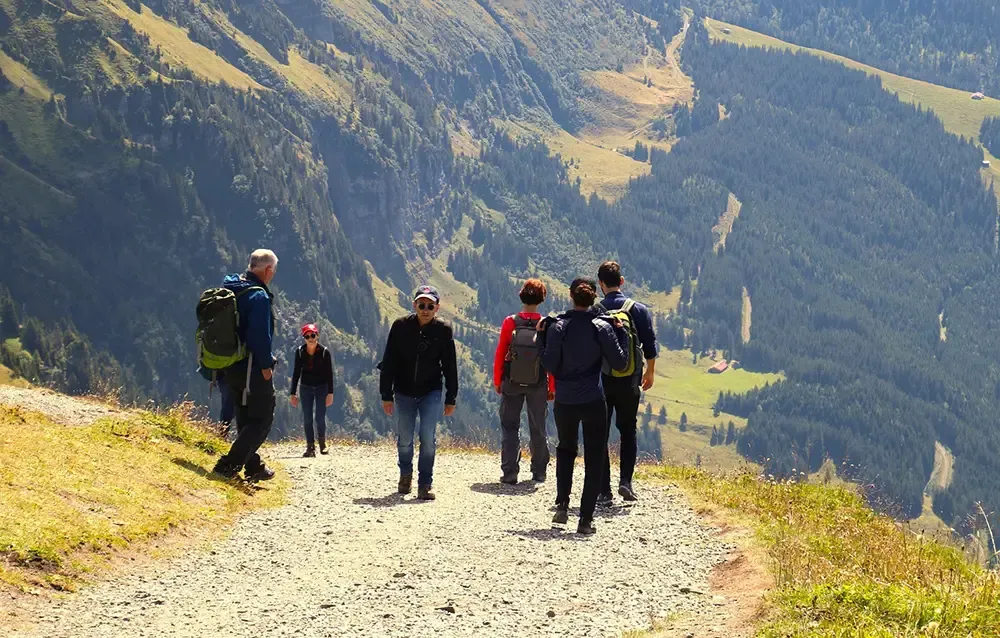
The Coast to Coast Path became a National Trail in March 2026, after a £5.5 million programme of resurfacing and signage work. It runs 306 km from St Bees on the Irish Sea to Robin Hood's Bay on the North Sea, crossing 3 national parks on the way.
The upgrade matters for older walkers specifically. New flagstone sections across Nine Standards Rigg have replaced some of the worst bog on the route, and an accessible path now circles Ennerdale Water. Most operators split it into 14 or 15 stages. That brings the daily average down to about 20 km, and the villages along it are small enough that the evening choice is usually between 2 pubs.
The Camino Francés
The Camino de Santiago passed half a million arrivals for the first time in 2025, with 530,919 people collecting a Compostela in Santiago. The demographics are the interesting part. In 2024 the 46 to 65 age band was the largest at 41.3% of all pilgrims, and more than 53,000 walkers were over 65.
The Francés accounts for about 47% of that traffic, which makes it crowded and also makes it sociable in a way the quieter routes are not. Walkers move at different speeds but stop in the same towns, so a person you met on day 2 reappears on day 6. Booking the last 100 km from Sarria gives the same effect in a week, and the accommodation along that stretch is the densest on any long path in Europe.
Alpine Circuits and Other European Long Paths
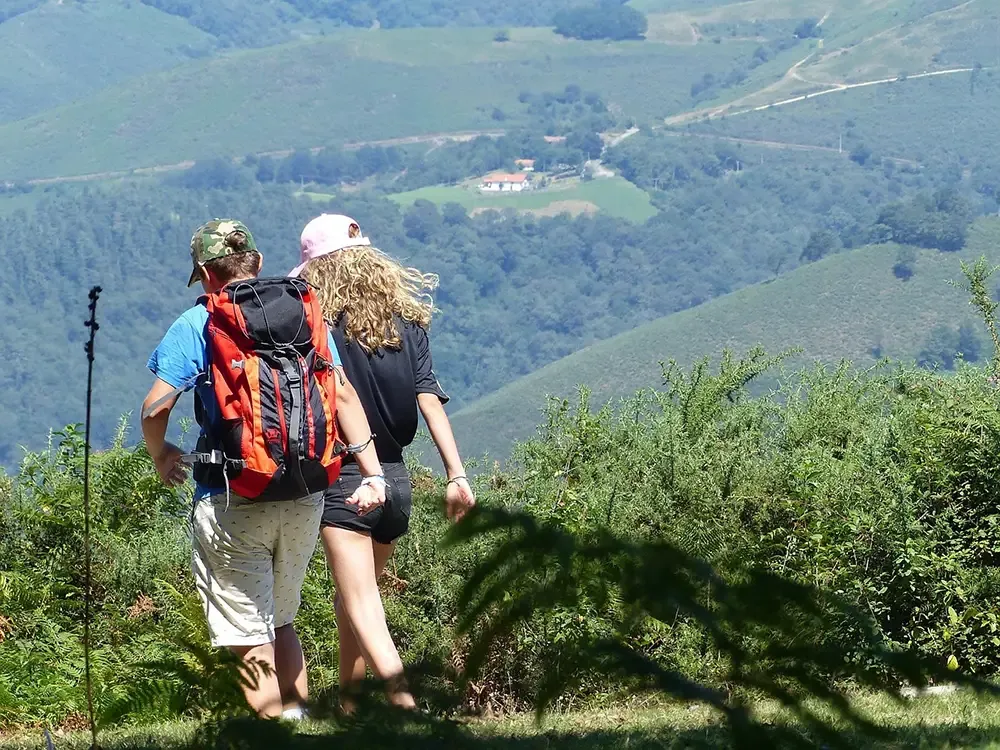
The Tour du Mont-Blanc is 170 km around the massif through France, Italy and Switzerland, usually walked in 11 stages, and about 80,000 people walk it each year. Overcrowding has pushed the French communes towards turning it into a reservation-only hiking trail from spring 2027, with huts and bivouac zones needing to be booked in advance.
Refuge nights are the reason to consider it. A mountain hut serves one meal at one time and puts 40 people in a room with no phone signal. Guided operators run softer versions with valley hotels and shorter days for walkers who want the circuit without the dormitories. CNN's survey of Europe's best long-distance hiking trails is a reasonable starting list for anybody who has already walked the Camino and the Coast to Coast. The Rota Vicentina in Portugal, the Alta Via routes in the Dolomites and the West Highland Way in Scotland all have the same combination of fixed stages and small villages.
The West Highland Way is the best of those for a first long walk. It covers 154 km from Milngavie to Fort William over 7 or 8 days, the terrain is forgiving until the last 2 stages, and the bunkhouses and inns along it are used to solo walkers arriving without a booking. Baggage transfer on that route costs about £12 a bag a day, which is the single change that turns a hard week into a manageable one for anybody past 60.
The Last Evening
On the final night of a guided week the group usually eats late and somebody produces a list of email addresses on the back of a route card. Half of those addresses never get used. The other half turn into a message in February asking who is doing the Dolomites in July, and that is how most people end up on their second walking holiday. Nobody plans that part. It happens somewhere around the fourth evening, when the group stops asking each other what they do for a living and starts arguing about the weather forecast.