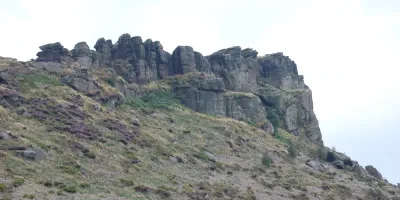
Castleton is one of the Peak District's classic "honeypots" where you can plan a whole weekend around the village because so much begins in, or starts from, the village itself. Cave Dale starts between cottages above the centre, Peveril Castle rises directly behind it, Peak Cavern is reached on foot, and the route towards Mam Tor and the Great Ridge can start without driving to another trailhead. There are four show caves open to the public around the village, while pubs, cafés, shops and accommodation mean there is enough here once the walking stops as well.
This concentration, along with it being at the end of the Hope Valley and its narrow streets is also a reason Castleton gets busy. On a sunny weekend it is not a quiet base hidden away in the hills and the pressure from cars around Mam Tor, in particular, became serious enough for Derbyshire County Council to introduce new parking restrictions and the county's first red routes in 2026. Castleton works best if you accept its popularity as part of the bargain rather than arrive expecting an empty Peak District village.
Is Castleton worth visiting?
For a first Peak District trip, particularly one that offers more than walking, Castleton is difficult to fault. A serious hill day can sit alongside a cave tour, a castle visit or a much shorter walk without needing to jump in your car and relocate between each one. That makes it particularly useful for a weekend where the weather may change or where not everyone wants the same level of activity.
Its weakness is almost the reverse. If the only purpose of the trip is to get onto Kinder Scout, Edale puts you closer to that particular objective. If the main aim is a quieter village, Castleton's attractions and coach traffic work against it. What Castleton does unusually well is provide several quite different reasons to stay in the same place.
A day trip is worthwhile. A weekend makes considerably more sense.
Walk Mam Tor from Castleton, not just from the nearest car park
Mam Tor is the iconic hill that dominates the head of the valley above Castleton, but there are two quite different ways to experience it.
The short circular walk from Mam Nick is about three miles and is the shortest and simplest option and is ideal if reaching the summit is the main objective, but there's a very popular longer route from Castleton which makes Mam Tor part of a proper day rather than a quick climb from the roadside. Visit Peak District's Castleton, Mam Tor & The Great Ridge Walk covers around 6½ miles, with an eight-mile option, crossing Mam Tor before following the Great Ridge over Back Tor towards Lose Hill.
The ridge is the part worth keeping time for. It separates the Edale and Hope valleys, so after the initial climb the route spends a long stretch high enough for the landscape to open on both sides. Starting and finishing in Castleton also means the walk naturally uses the village as a base rather than requiring another parking decision at Mam Nick.
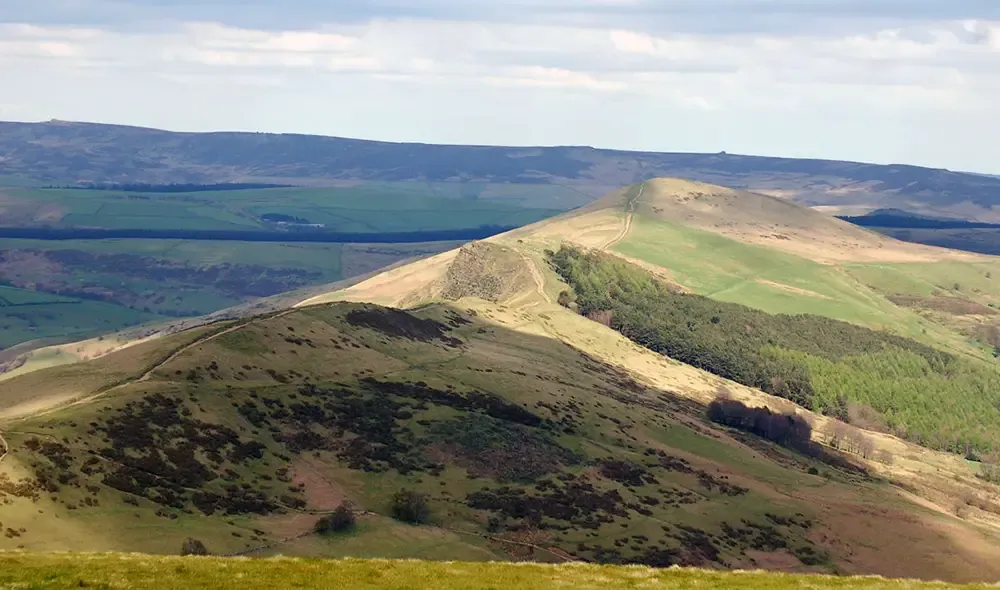
One detour does add something to the walk. Mam Tor's East Face is primarily formed of layers of unstable shale, giving Mam Tor the alternative name of "the Shivering Mountain". The remains of the old A625 road scar the hillside where repeated landslips eventually made the road too difficult to maintain. It was abandoned in 1977, and the broken tarmac is still there to walk across. The National Park Authority has enabled a short traffic-free route along part of the old road, connecting Blue John Mines and Treak Cliff Cavern by foot. Also of interest at the start of this walk is Odin Mine, a lead mine dating back to Roman times. The remains of an ore crushing circle can still be seen, but while the mine remains are an added point of interest it's important not to venture into the mine entrance itself without proper equipment and experience.
Cave Dale gives you a shorter walk straight from the village
Cave Dale, which heads up from the opposite side of the village to the Great Ridge is less of a commitment than taking on the whole of the Great Ridge, but it's far from flat. The entrance is reached by walking between cottages above the Market Place, where the Limestone Way leaves the village. Within minutes the houses disappear behind steep limestone sides with Peveril Castle sitting above on the right as you climb out of the village.
The path through the dale is rocky rather than technically difficult, and can be incorporated into a long circular walk connecting the village to the head of the Winnats Pass and on to Mam Tor. Cave Dale also highlights the difference between the White and Dark Peaks, with the pale limestone on the southern side of the Hope Valley and the dark gritstone and shales to the northern side. It's Castleton's position on this geological boundary between the two rock types that's responsible for the village's existence with the underground water courses hitting the impervious sandstone layers and being forced to the surface at Peaks Cavern. This stream becomes the River Noe that runs the length of the Hope before joining the River Derwent near Bamford.
Winnats Pass is better treated as part of the landscape
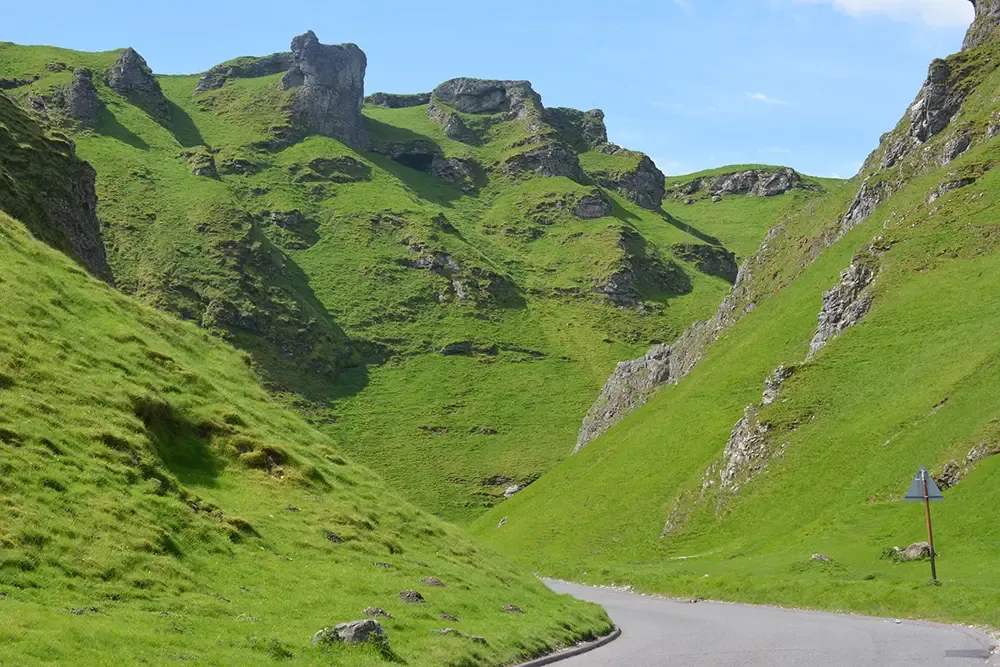
The Winnats Pass appears on almost every collection of Castleton photographs, but it's slightly not exactly a standalone "thing to do". The road climbs tightly between steep limestone sides immediately west of the village, and it became the main western road into Castleton after the Mam Tor road was lost.
It is worth seeing, particularly if your walk takes you towards Mam Tor, the caverns or the broken road; Speedwell Cavern lies at the foot of the pass. Whether it needs, or justifies, an hour carved out of the itinerary simply so the trip can include another named attraction is, however, a matter of choice. Cyclists will recognise the challenge of a pedal powered ascent from it's regular place in the Tour of Britain and the 2027 Tour de France.
Which Castleton cave should you visit?
Four show caves in one small village sounds as though it should demand a complicated itinerary. For most visitors, the more pertinent question is which one to choose.
| Cave | Best reason to choose it | The main thing to know |
| Peak Cavern | Best first choice and the cave most closely tied to Castleton itself | Walkable from the village; huge natural entrance; roughly hour-long guided visit; strong local rope-making history. |
| Speedwell Cavern | The underground boat trip | A former lead mine entered via 106 steps before the boat journey through the flooded workings. Visits normally take around 45 minutes to an hour and advance booking is strongly recommended at busy times. |
| Treak Cliff Cavern | Blue John and a more self-paced visit | Known for Blue John deposits and cave formations. The current visit takes around 45 minutes using a self-guided audio format; there are 80 steps just to reach the entrance and another 196 underground. |
| Blue John Cavern | A traditional guided mineral cave | Another chance to see Blue John underground, with guided visits of roughly 50–60 minutes. The main practical difference is the 245 steps down into the cavern and back out. |
Peak Cavern gets probably the strongest recommendation of the four show caves for a first Castleton trip. It begins almost as part of the village, beneath Peveril Castle, and its entrance is the largest natural cave entrance in Britain. Rope-makers also lived and worked in and around the entrance for centuries, producing rope for the local lead-mining industry. It is one of those details that becomes much more interesting when you are standing inside the cave entrance, looking at the remains and reconstructions of the primitive rope making equipment, rather than reading about it on a plaque.
Speedwell Cavern is the more distinctive choice with its unique underground boat journey the attraction. Treak Cliff Cavern and Blue John Cavern make more sense if Blue John, the semi-precious gemstone, itself, is the reason for going underground: The self-guided format of Treak Cliff Cavern gives more control over pace, while Blue John Cavern retains the traditional guided-tour approach. Both involve a substantial number of steps.
Peveril Castle is worth an hour, not half a day
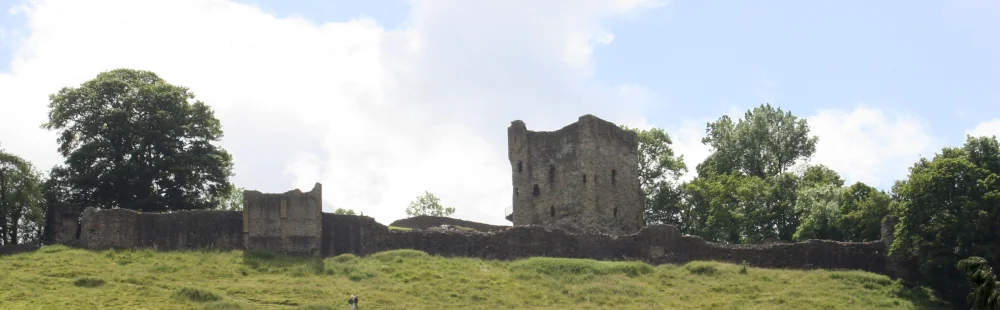
Peveril Castle looks larger from the village than the surviving ruins feel once you reach them. English Heritage gives around one hour as an average visit, which is a sensible expectation. The climb is part of it: the castle stands above the village with drops towards both Cave Dale and Peak Cavern Gorge.
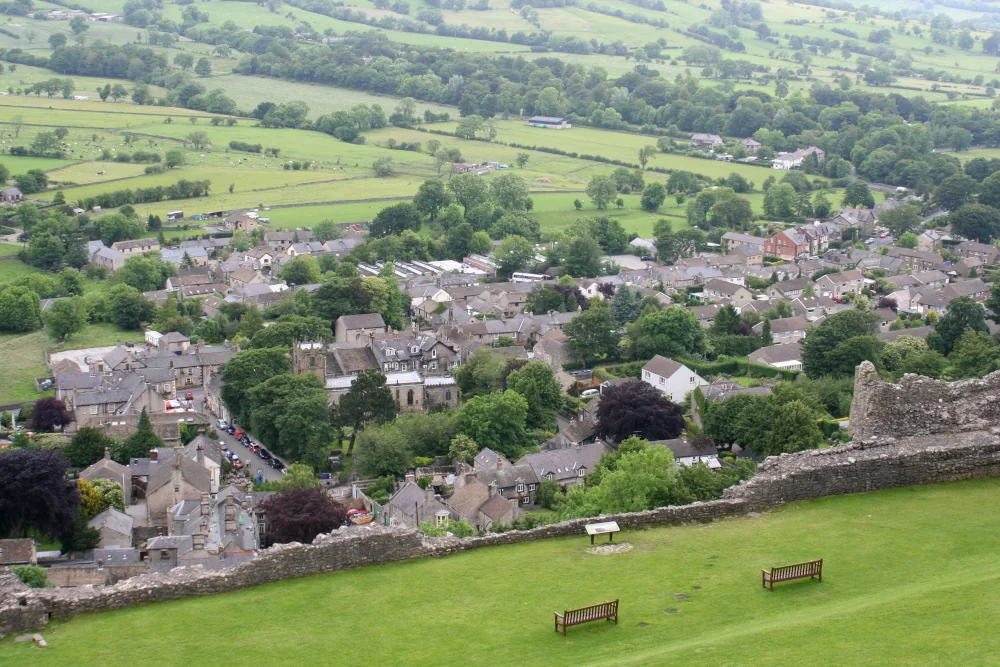
The castle was established soon after the Norman Conquest and the surviving keep dates from the 12th century, but this is not a place of furnished rooms and long interior exhibitions. Its strongest feature is its position. From above, the relationship between the village, Cave Dale and Peak Cavern becomes much easier to understand, while the ruins give enough context to justify the climb without consuming half the day. The Castle was the prime setting of Sir Walter Scott, of Ivanhoe fame's, book Peveril of the Peak in 1823, showcasing how the castle was drawing people to the village over 200 years ago.
The castle itself is not accessible to wheelchair users or people with significant walking difficulties. English Heritage describes the approach as uphill, with uneven ground and historic steps around the site.
Staying in Castleton makes more sense than using it as a car park
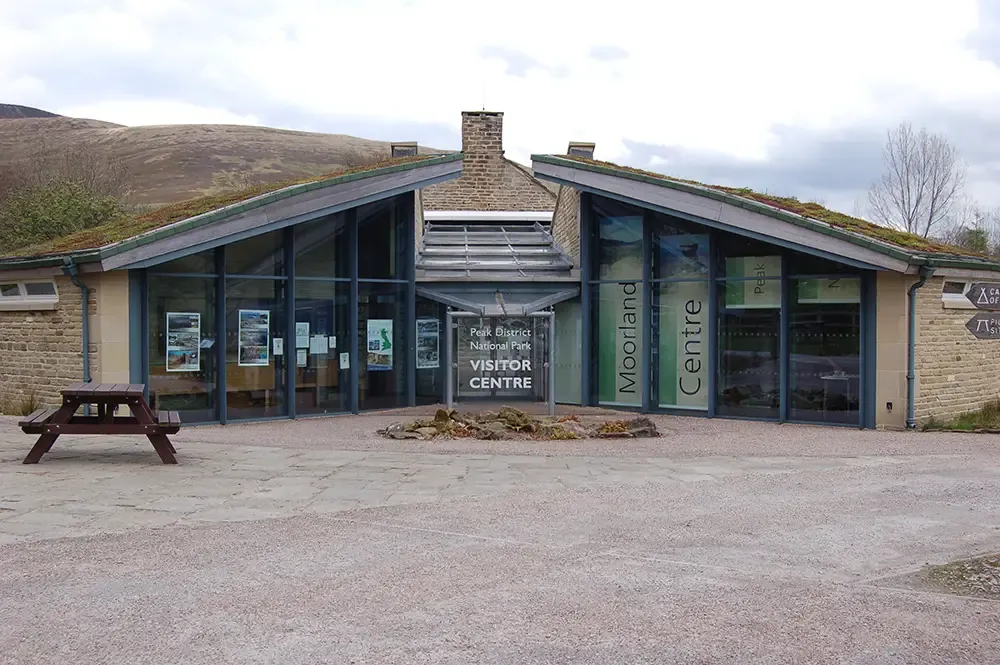
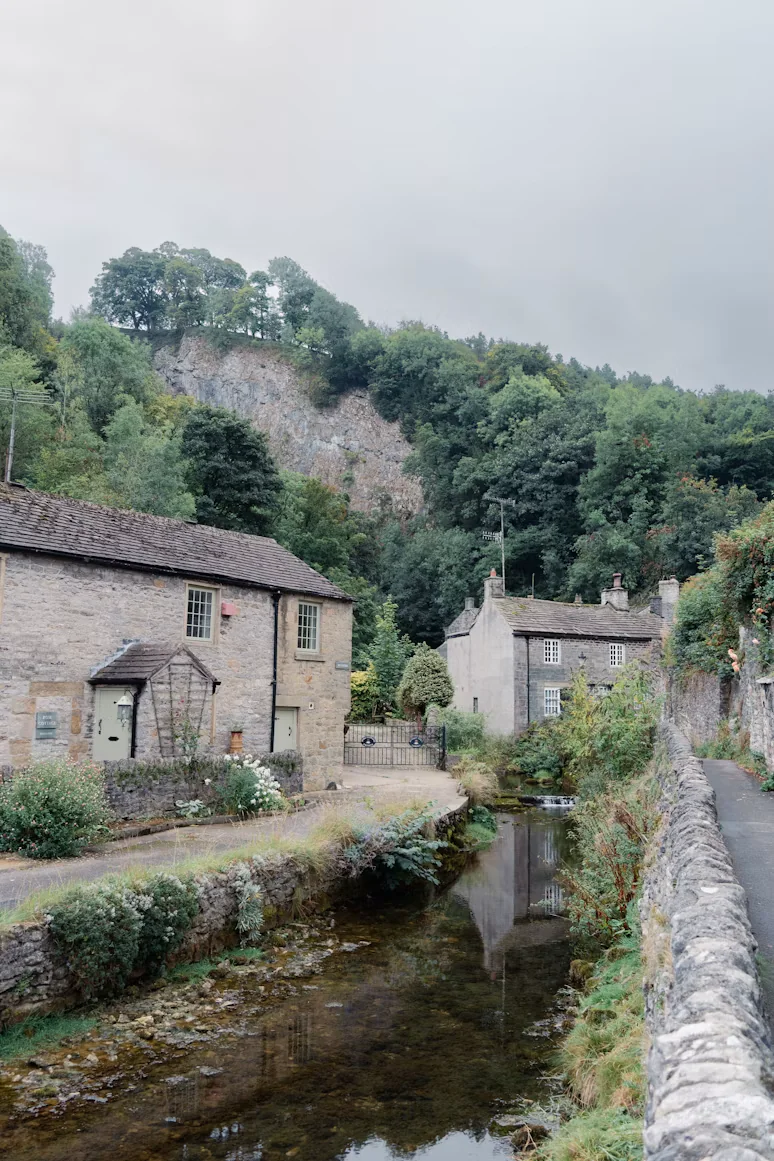
The village has enough pubs, cafés, shops, and accommodation that a weekend doesn't require repeated trips elsewhere for the basics. The National Park visitor centre is next to the main village car park and includes information, local-history displays, and accessible facilities, while accommodation in and around Castleton ranges from B&Bs and pubs to cottages and self-catering options.
Having a good supply of accommodation is important as many of Castleton's best activities already start on foot. Staying centrally can mean walking out for Mam Tor or Cave Dale, returning for food, and spending the following day around Peak Cavern and Peveril Castle without moving the car at all.
The trade-off is choice. Castleton has plenty for a village but it is still a village; anyone wanting a larger town centre, wider shopping or much more choice at night will find its limits fairly quickly. For a walking weekend, that compactness is more often an advantage.
How long do you need in Castleton?
One day works if you choose a type of day rather than trying to see the whole place. A Great Ridge walk can comfortably occupy the main part of it. Alternatively, Peak Cavern, Peveril Castle, the village and a short walk into Cave Dale make a much more varied day with less time on the hills.
Trying to combine the full Great Ridge, a cavern and the castle is possible on paper but may not be especially appealing in practice. You would spend much of the day checking the time. Two days could be the better choice for a first visit. One can be given to Mam Tor and the Great Ridge, leaving the other for a cavern, the castle and whatever shorter walk fits the weather.
With three nights or more, Castleton starts functioning as a broader Hope Valley base. At that point the question changes from "what is there to do in Castleton?" to which parts of the Peak District you want to reach from it.
When to visit Castleton
Spring and summer give the most freedom for long ridge walks, but good weather and longer days also bring the greatest pressure on Mam Tor and the village. The National Trust's advice about parking spaces filling up early is certainly worth bearing in mind during these periods..
Autumn is a strong compromise for walking, particularly outside school holidays, although the exposed ridge becomes more dependent on wind and cloud. Winter shortens the hill day but does not have to detract from Castleton's other attractions. The individual caves publish their own seasonal opening arrangements, and the village's Christmas lights have long been part of Castleton's winter calendar. Individual attractions should still be checked before travelling rather than assuming summer opening patterns continue unchanged.
There is one late-May date worth knowing about. Castleton Garland Day is normally held on 29 May; if the date falls on a Sunday, the ceremony moves to the Saturday or Monday. A Garland King on horseback leads the procession beneath an enormous flower-covered garland, with the tradition commonly associated with Oak Apple Day and the restoration of Charles II, although its origins may be older.
Getting to Castleton and where to park
The main village car park sits beside the National Park visitor centre on Buxton Road, which is the simplest starting point for the village, Peak Cavern, Cave Dale and Peveril Castle.
Parking around Mam Tor needs more care than older guides may suggest. Derbyshire County Council introduced new restrictions in 2026, including double red lines on sections of Old Mam Tor Road and routes towards Blue John Cavern, Rushup Edge and Sparrowpit. Double red lines mean no stopping, including on the verge behind them, although designated parking bays remain in several places. Use the signed parking that exists rather than assuming an old roadside spot is still legal.
Castleton has no railway station. Hope is around 2½ miles away, while the current 271/272 bus corridor links Castleton with Hope, Bamford, Hathersage and Sheffield. That is enough detail for a general destination guide; readers building the entire weekend around trains and buses can use the dedicated Peak District car-free guide for the timetable-level planning.
The village is a better starting point for a fully accessible Peak District visit than the surrounding hills might suggest. The National Park's Castleton Peak Miles Without Stiles route runs for about 350 metres from the visitor-centre area towards the point where the approach to Peak Cavern begins to climb. The visitor centre itself has accessible facilities, and the National Park also provides a wider Accessible Castleton guide.
Of the main attractions Peveril Castle is not wheelchair accessible while Speedwell Cavern, Treak Cliff Cavern and Blue John Cavern all involve large numbers of steps. Peak Cavern has the gentler cave approach of the four and offers a mobility-friendly entrance option, although wheelchairs and pushchairs cannot continue through the full cave tour.
While it's possible to cover all, or most of, the village, a visit to Castleton works best when there is still something left for a return trip. Mam Tor and the Great Ridge deserve a day, particularly as part of a circular walk including a return from Hope along the River Noe. There's enough difference between the four caves to justify a return trip rather than being squeezed between ticket slots, and it's hard to imagine anyone getting bored of the stunning scenery. Throw in shopping for the unique Blue John jewellery and an abundance of tea shops and cafes and it's easy to see why Castleton brings people back time after time.