
Your knife needs to handle all of it — and the steel it's made from determines whether it does that reliably or becomes a rusty disappointment after a wet weekend in Snowdonia.
Here's what you actually need to know.
Why Does British Weather Destroy the Wrong Knife Steel?
The UK averages over 1,200mm of rainfall annually in upland areas like the Lake District and Scottish Highlands. That's not just rain — it's persistent moisture in the air, wet vegetation, damp sheaths, and condensation every time you move between cold outside and warm tent. Carbon steel left in those conditions for 48 hours without maintenance will show surface rust. That's not a flaw in your technique. That's chemistry.
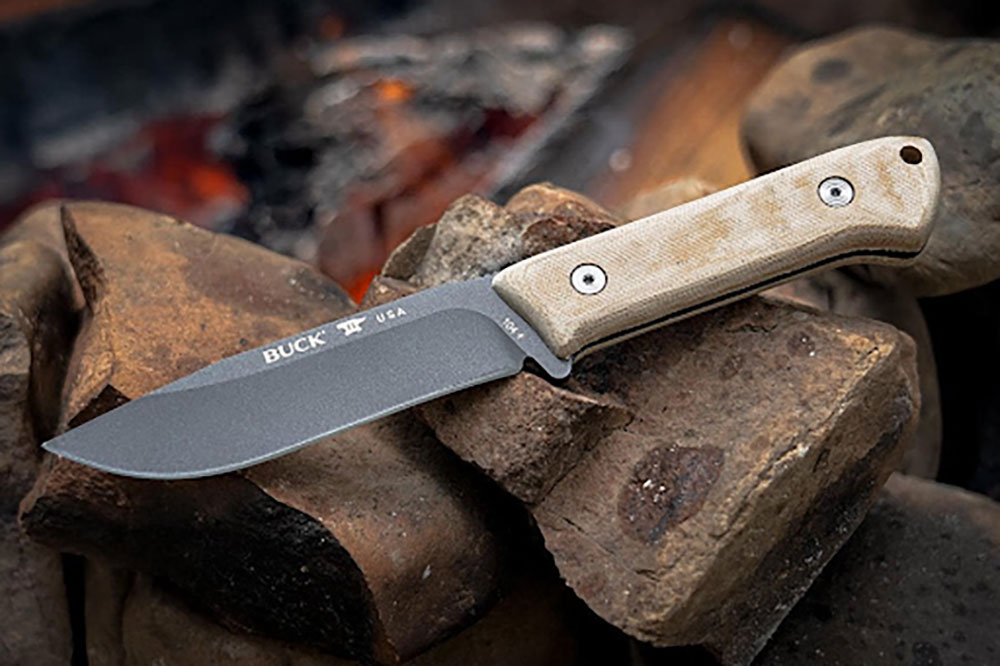
Steel rusts when iron reacts with oxygen and water. The speed of that reaction depends almost entirely on chromium content. Add at least 10.5% chromium to steel, and you get a passive oxide layer that blocks the reaction. That's stainless steel. Below that threshold, you're in carbon steel territory — and in Britain, carbon steel demands daily attention.
Carbon Steel vs. Stainless: The Core Trade-Off
Choosing carbon steel for its edge retention means accepting that you'll oil it every evening in camp. That's the deal.
Carbon steels like O1 and 1095 are beloved in the bushcraft community for good reason. They sharpen easily on a basic whetstone, hold a working edge through hard use, and give you clear feedback when they need attention — the edge rolls rather than chips. But in wet British conditions, 1095 can show rust spots within 24 hours if left damp in a leather sheath. O1 is slightly more forgiving but not dramatically so.
The obverse side of choosing stainless is that some grades are genuinely difficult to sharpen in the field. You'll need a diamond stone rather than a basic Arkansas or natural slate. That's a real consideration when you're three days into a route in the Cairngorms.
Which Stainless Steels Actually Work in the Field?
Not all stainless is equal. Here's where the practical differences matter most.
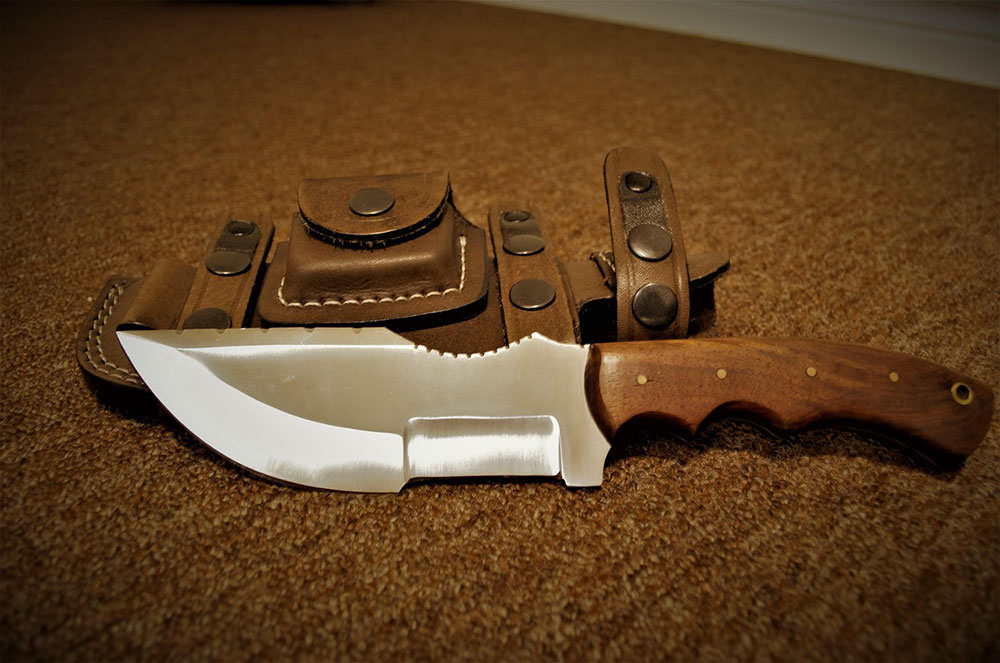
- Sandvik 12C27 is the benchmark for wet-climate performance. Developed in Sweden — a country that understands cold and damp — it contains 13.5% chromium and 0.6% carbon. It sharpens readily, holds a working edge through moderate use, and resists corrosion reliably. Mora uses it across their range for exactly these reasons. A Mora Companion in 12C27 costs around £15 and will outlast many knives ten times its price if maintained properly.
- VG-10 sits a step up. At 15% chromium and 1% carbon, it offers better edge retention than 12C27 while remaining genuinely corrosion resistant. The trade-off: it's harder to touch up in the field and more prone to chipping if you use it for heavy batoning. It's a better choice for someone who sharpens at home between trips rather than on the trail.
- S35VN is premium territory. Excellent edge retention, good toughness, solid corrosion resistance. The cost is real — knives in S35VN typically start at £150-200 — and field sharpening requires a quality diamond stone. For a serious hillwalker who wants one knife for years, it's worth considering.
Beyond off-the-shelf options, some hillwalkers reach a point where no production knife matches their exact grip preference, blade geometry, or steel specification. A bespoke blade — built around premium steels like M390 or Damascus, with an ergonomic Micarta or Carbon Fiber handle shaped to your hand — solves the fit problem that catalogue knives can't. That's the territory of a custom knife shop, where EDC functionality and handcrafted precision locking mechanisms are specified from scratch rather than compromised from a production run.
Expert Tip from James Cropper, Bushcraft Instructor and Wilderness Guide: "People obsess over steel grade and ignore the sheath. A wet leather sheath holds moisture against the blade constantly. Switch to a Kydex or synthetic sheath in British conditions and you'll get twice the life from any steel — including carbon."
Steel Comparison: At a Glance
|
Steel |
Corrosion Resistance |
Edge Retention |
Field Sharpenability |
Best For |
|
1095 Carbon |
Poor |
Good |
Excellent |
Dry conditions, dedicated bushcrafters |
|
O1 Carbon |
Poor |
Very Good |
Excellent |
Same as above |
|
Sandvik 12C27 |
Very Good |
Moderate |
Good |
UK hillwalking, general camp use |
|
VG-10 |
Excellent |
Good |
Moderate |
Multi-day trips, low-maintenance users |
|
S35VN |
Excellent |
Very Good |
Moderate (diamond needed) |
Long-term investment knife |
What Happens When You Get the Steel Wrong
Consider a scenario that plays out regularly: a walker buys a beautiful O1 carbon steel knife before a five-day route through the Knoydart peninsula. Day one, it performs perfectly. By day three, after repeated rain and a damp sheath, there's visible surface rust along the bevel. By day five, a rust pit has started near the edge. Back home, removing it requires reprofiling on a coarse stone — removing metal that took the maker hours to put there. The fix: either switch to a stainless option for multi-day wet routes, or commit to wiping and oiling the blade every single evening without exception.
The lesson isn't that carbon steel is bad. It's that carbon steel in Britain requires a maintenance discipline that not everyone wants to maintain on a tired evening after 20 miles.
Does Temperature Change Matter for Steel Performance?
Yes, but not in the way most people expect.
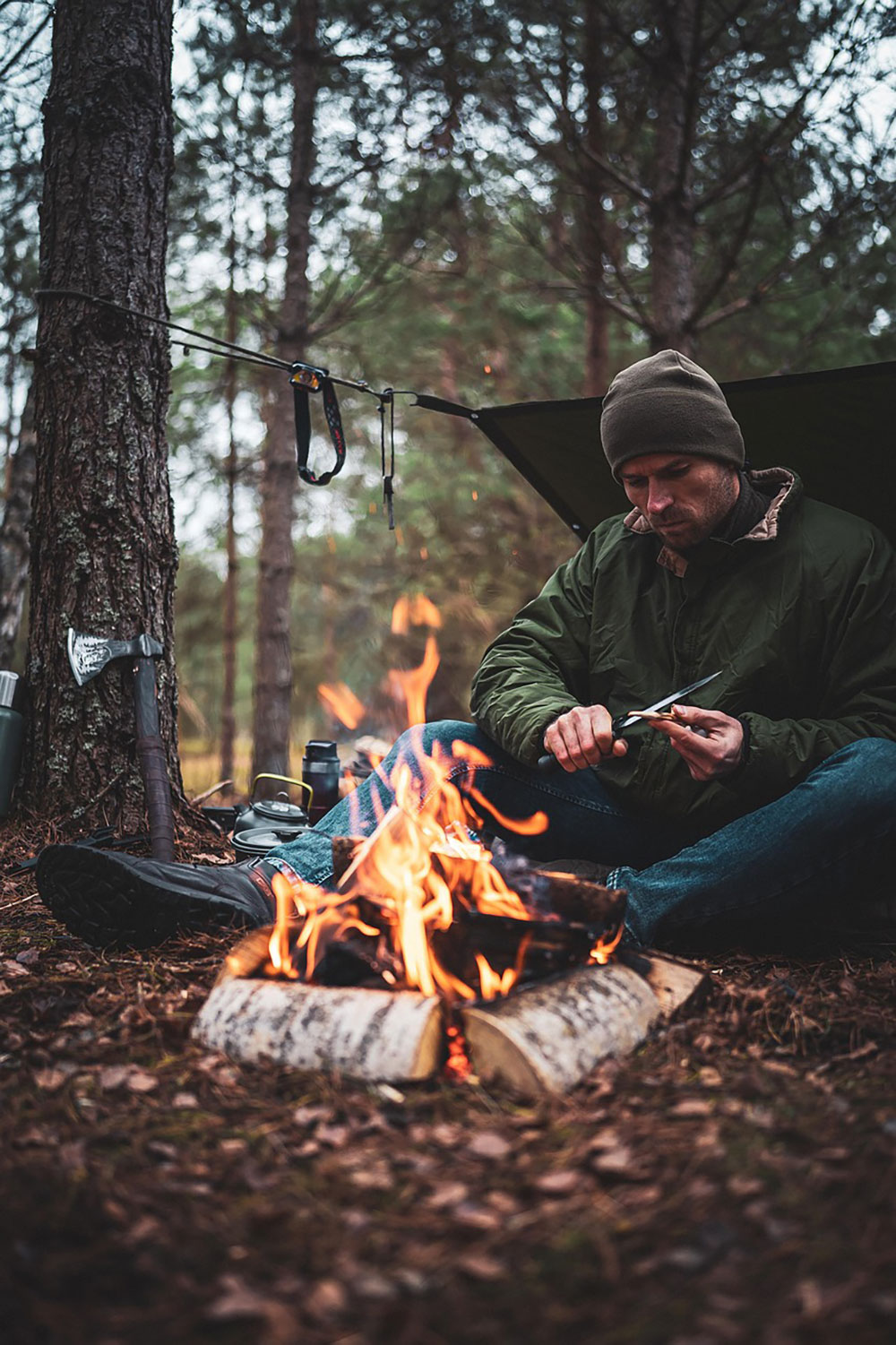
Steel hardness (measured in HRC) doesn't change meaningfully across the temperature range you'll encounter in British hills — roughly -10°C to 25°C. What does change is handle material behaviour and your own dexterity. A G10 or Micarta handle remains grippy when wet and cold. Wood or polished synthetic becomes dangerous.
Think of it like tyre compound on a road bike. The rubber doesn't fail catastrophically in the cold — it just loses grip progressively. Your knife handle works the same way. The steel is fine. Your ability to control it safely is what degrades.
How to Maintain Any Knife in British Conditions
- Wipe the blade dry after every use — don't leave moisture sitting on the steel.
- Apply a thin coat of food-safe mineral oil or Tuf-Glide before storage.
- Store in a synthetic sheath or remove from leather overnight in wet conditions.
- Check the edge weekly on multi-day trips — a strop keeps a working edge going without removing metal.
- Address rust immediately with fine wet-and-dry paper (600 grit) before it pits.
Expert Tip from Sarah Milligan, Mountain Leader and Gear Reviewer for Trail Magazine: "In Scotland specifically, the combination of peat water and salt air near the coast is genuinely aggressive on steel. I've seen VG-10 blades develop micro-pitting after a single coastal route where the owner didn't rinse and dry the knife. Rinse with fresh water after coastal use. Every time."
The Practical Verdict
For most British hillwalkers, Sandvik 12C27 or its close equivalent (13C26, used by Fallkniven) is the right answer. It handles the wet without demanding daily maintenance rituals, sharpens on a basic ceramic rod, and costs a fraction of premium steels.
If you're doing serious multi-day routes in remote terrain and want minimal maintenance overhead, VG-10 or S35VN makes sense. Budget accordingly and carry a diamond stone.
If you're a dedicated bushcrafter who camps regularly and enjoys the maintenance side of the craft, 1095 or O1 rewards that attention with superb sharpening characteristics. Just treat it like a cast iron pan — dry it, oil it, respect it.
The best knife steel for British conditions is the one you'll actually maintain. A neglected VG-10 blade will fail you faster than a well-kept 1095. Choose the steel that fits your habits, not just your aspirations.