

Less than 3 minutes of pumping and pegging and the flux is ready for use, pitching all-in-one straight from the bag, and it's spacious. Airbeams apart it's a pretty standard sloped tunnel design with a single opening and a large vestibule. The inner, which could quite conceivably take 3 people is a complete unit with its own groundsheet although the tent has a complete, built in, groundsheet anyway. Pockets are all at the door end, where they'll be accessible at any time and the rear of the inner has a high level ventilation panel to help airflow. One handy feature, for the person sleeping on the left, is that if you leave the outer panel that accesses the pump point open it gives extra ventilation and sits at perfect eye-level to see outside from the comfort of your sleeping bag.
 The porch includes the same groundsheet that's built into the whole tent which limits cooking to an extent, though with care it's possible thanks to the size of the porch and it's height. At 1.7 x 1.5m there's more than enough room for 2 people's kit, particularly as with the weight of the Flux you're more likely to be car-based than backpacking, and the 1.2m height is enough to sit upright. The sides of the porch are windows with inner screens that be clipped up to restrict the light or looking in from outside. The porch, however, had what we found to be the biggest issue with the tent - the door. The door slopes fairly steeply from 1.2m to ground level and has both fly and mosquito nets, each with their own zip and each closing from top to bottom. In practise what this means after a wet night is leaning forward at ground level to get the zipper, pushing against the wet flysheet with our head as you open the two zips upwards. It's a simple issue to address by adding another zipper that allows you to open the door downwards. With the door open there's also an issue of where to secure it, with the toggles in the roof being between the fly and the net and nowhere to tie back the fly.
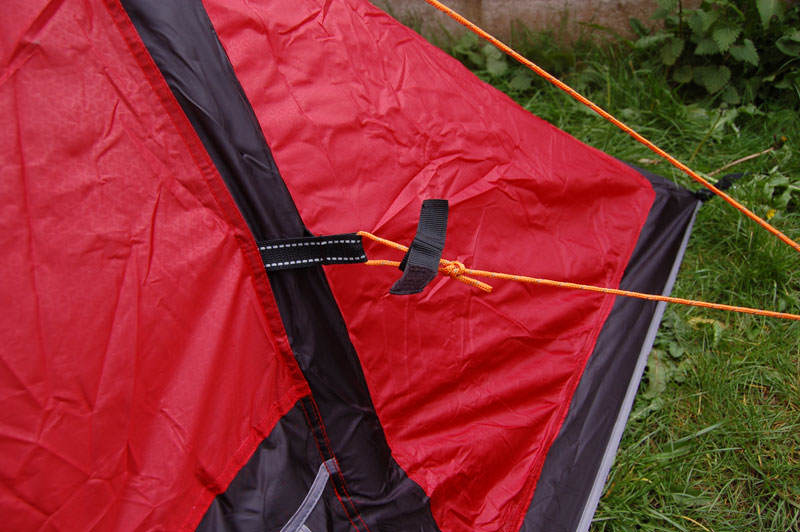 Ignoring the airbeam technology, and you can because despite hearing the wind blowing other tents on a wet night in the Lakes the flux was motionless inside, the Vango Flux 200 is too heavy for backpacking but if you like single entry tunnel tents it's solid with acres of room for both sleeping and storage and goes up quickly. Ventilation is very good and as final pleasant surprise it fits back into its storage bag with ease!
Price: £225
Weight: 5.70kg
Colour: Red/Grey
Features:
- VANGO AIRBEAM® TECHNOLOGY
- All in one or flysheet first pitching
- Easy pitch tunnel style
- TBS®II - Tension Band System
- Protex® 3,000HH polyester embossed 70D flysheet
- Sewn in polyester groundsheet
- Lightweight inner tent groundsheet
- NEW larger windows
- Fully wind & rain tested
- King pole doors
- Vango AirZone ventilation
- Front mesh door
- Part mesh inner door
- Reflective webbing
- Easy fi nd Inner clips
- Handled carry bag
- Supplied with Pump
Pros: Goes up quickly, spacious, ventilation
Cons: pump gauge, zip system
Note: This article was restored from the archives. It's published creation date is inaccurate.