
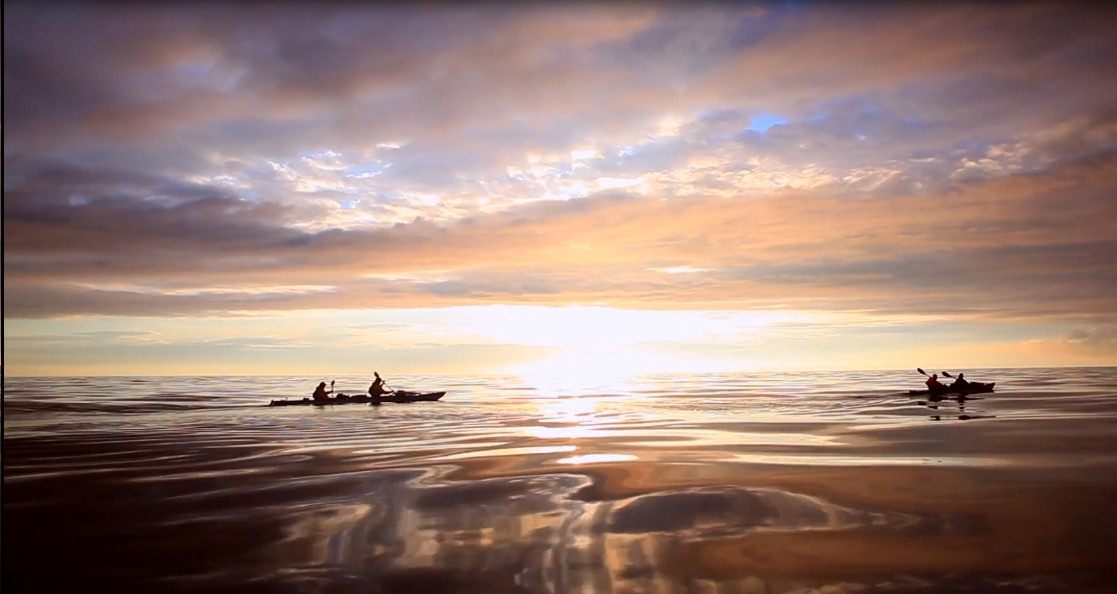
The idea itself sounds simple enough - 12° and 1000km - until you take a look at the map. The first leg alone meant setting a new record for the longest open water kayak crossing ever made with a continuous 33 hour paddle from Cornwall to South Wales. By the midway point the team of Ian O'Grady, Nick Beighton, Adam Harmer and Tori James found themselves in the Isle of Man with the coast of Scotland their next stop. On land they faced Glasgow city centre in the pouring rain and the Cairgorms still harbouring patches of snow by bike and on foot. For once it would be a Land's End to John O'Groats with meaning.
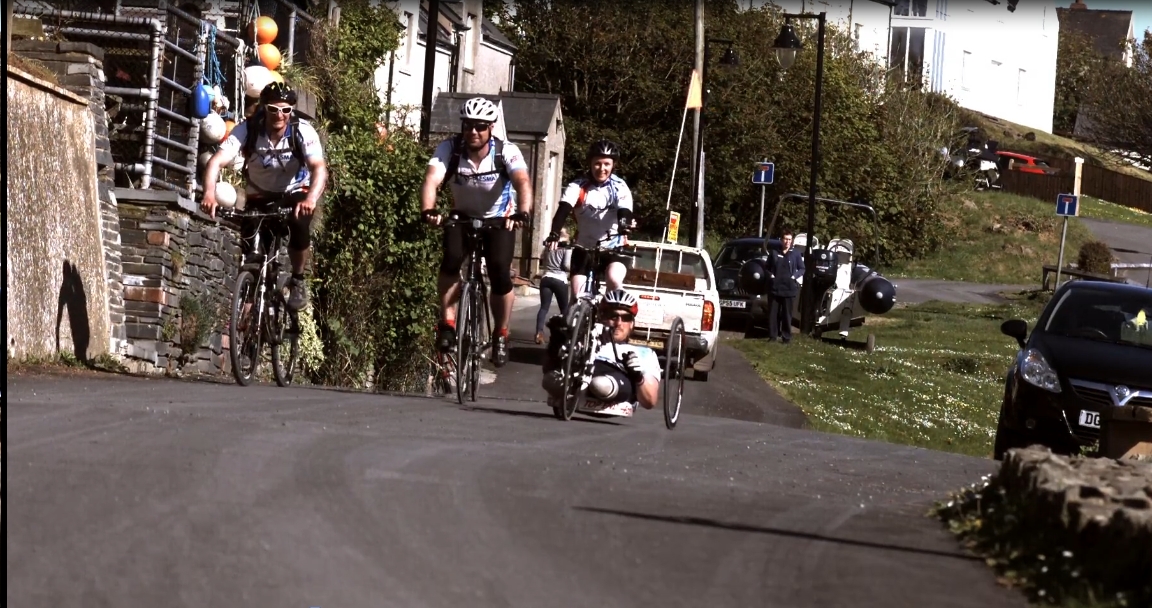
As a film the Beeline Britain project had obvious appeal, having the core ingredients of disabled veterans, a challenge that would be a challenge to anyone irrespective of any disability, and a story with a definitive start and end. To tell the story, however, compressing weeks into minutes without losing focus demanded something special and in As the Crow Flies, Director Ian Burton, achieved it. We've become accustomed to adventure films featuring crisp sharp images achieved through multiple on location re-shoots backed up by carefully controlled studio interviews but crossing busy shipping lanes in the dead of night is no place to ask someone to just "go back and do that bit again". The result, however, was a film that portrays the reality of true adventure.
Through inventive use of of ultra fast and nightime cameras the film manages to give the viewer the feeling of the scale and length of time involved in completing the journey. The use of slow motion on the relatively slow paddle arcs and the choice of panoramas with featureless horizons perfectly exhibit the isolation while giving the impression of the passage of long periods of time. Nightime filming using moonlight cameras adds to the effect but doesn't lose its impact through overuse. The combined effect is one where the imperfections inherent in having a limited number of cameras and angles to shoot from became positives rather than negatives, stripping away some of the gloss that's over dominant in today's films and replacing it with a reality you can almost taste as Ian handbikes through the diesel fume filled centre of Glasgow.
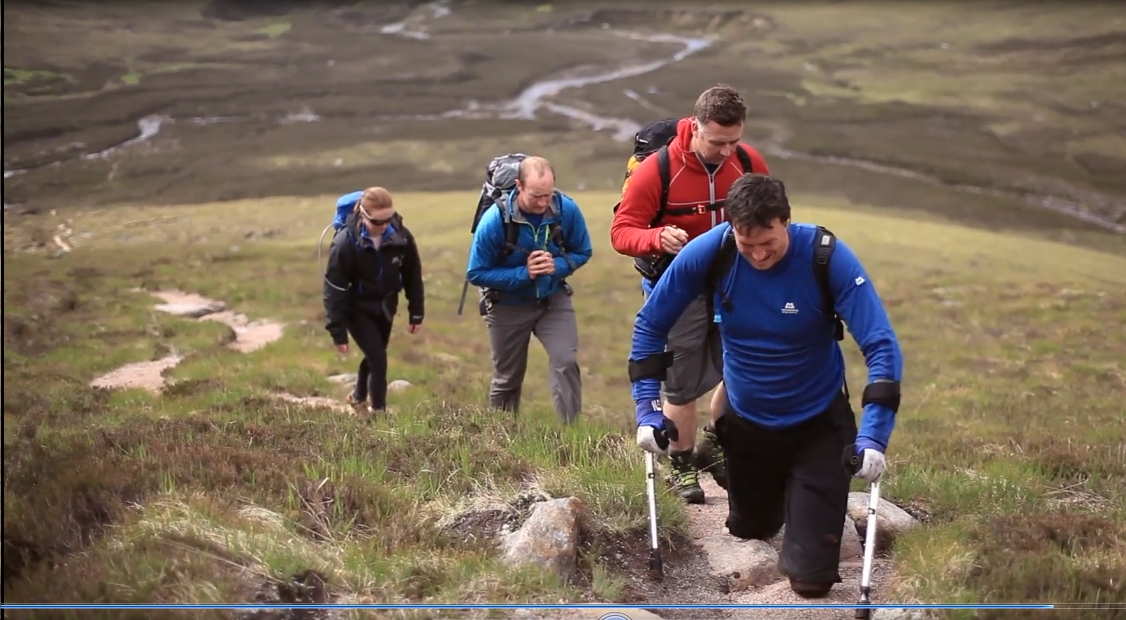
As a story As the Crow Flies fulfills the essentials of a start, a middle, and a successful end, but in the same way that Land's End to John O' Groats was more than just a physical journey the film is more than just a happy ending story. The film doesn't shy away from the uncomfortable yet doesn't overplay the obviously available emotion card. It demonstrates without over-emphasising the mental aspects of the challenge and does so both from the viewpoint of the participants and that of the support team and followers. The result is a film that pulls you into the story rather than leaving you as an observer and makes you emotionally invest in the outcome. To achieve that with a crew of a dozen and multiple re-shoots would be a major success, to do it live and continuously marks both As the Crow Flies as potentially the most influential adventure film of recent years.
All images are screenshots from the film ©Image Impossible